3 hr
Mission Bay Whale Watching Expedition with Legacy
- Entry ticket
- Mobile voucher
- Valid same day
- Free cancellation
San Diego Whale Watching — Mission Bay Expeditions
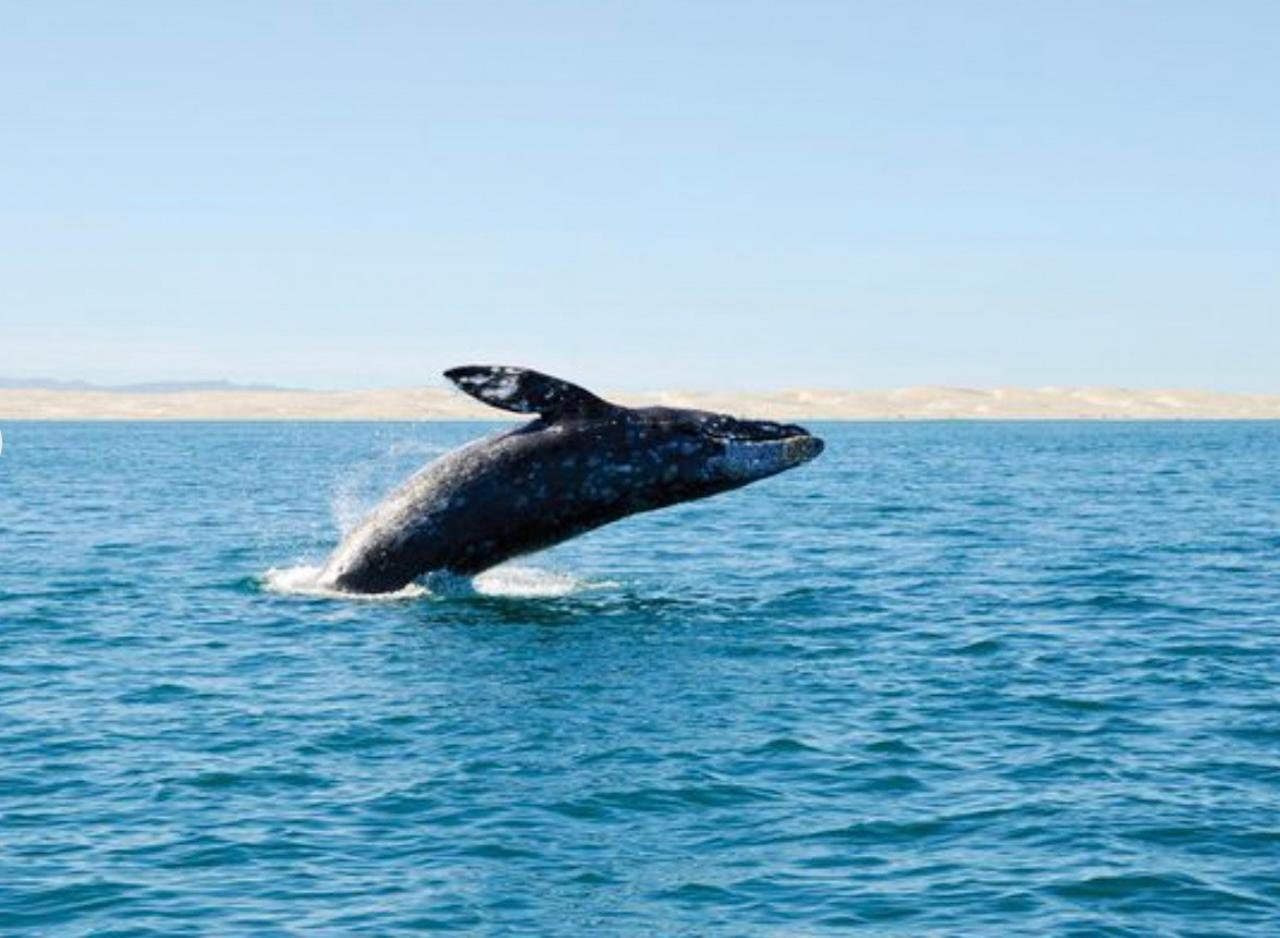
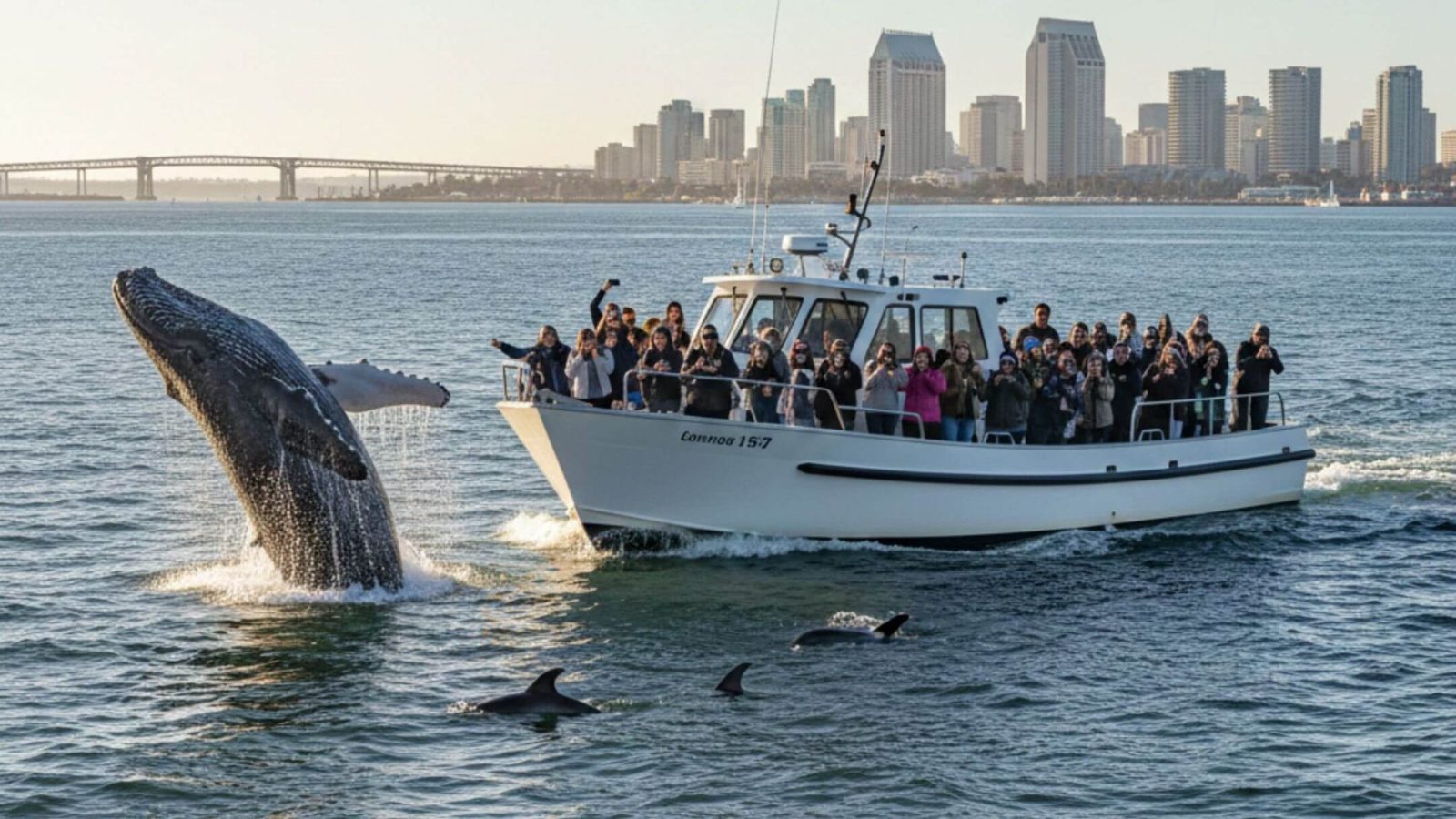
Gray whales breach off the coast, dolphins escort the bow.
Compare fares, pick the fit — all bookings are mobile-voucher and eligible for free cancellation where shown.
3 hr
3 hr
3 hr 30 min
Selecting the right san diego whale watching tickets is essential for a memorable coastal excursion. Whether you prefer a group setting or a more intimate experience, our official San Diego Whale Watching tours offer various access options to suit every traveler.
|
Top pick Standard Public Tour Open-deck seating |
Private Charter Exclusive vessel access | |
|---|---|---|
| Duration | 3 hours | Customizable |
| Included Areas | Main deck & bow | Full vessel access |
| Access Method | Boarding pass | Direct booking |
| Wait Time | No wait with booking | Priority boarding |
| What's Included | Naturalist narration | Personalized excursion |
| Best for | First-time visitors | Private groups |
| See tickets & prices |
Verdict: Choose the Standard Public Tour for a comprehensive marine experience, or book a Private Charter if you require a personalized san diego whale watching tickets tour.
Worth it for wildlife enthusiasts and nature lovers
San diego whale watching tickets deliver strong value when you understand what drives the cost. Unlike generic harbor cruises, specialized expeditions deploy experienced marine naturalists who interpret cetacean behavior in real time and position vessels where gray whales, blue whales, and common dolphins congregate along migration corridors. The Mission Bay departure point provides faster access to offshore feeding grounds compared to downtown piers, maximizing observation windows. Premium whale watching expeditions typically include hydrophones to detect vocalizations and smaller passenger counts that improve sightings from the rail. Standard san diego whale watching tickets tours accommodate larger groups but still benefit from the same seasonal abundance—gray whales pass through December through April, blue whales and fin whales appear May through November. The crew's ability to read ocean conditions and adjust routes separates these outings from static sightseeing. For visitors prioritizing marine wildlife over general bay scenery, the specialized expertise and higher encounter probability justify the cost. Casual tourists seeking only a boat ride may find standard harbor tours sufficient, but anyone serious about observing cetaceans in their natural habitat will recognize the value in dedicated whale and dolphin watching cruises staffed by trained naturalists.
Bottom line: San diego whale watching tickets tour options justify their cost through expert-led positioning and genuine cetacean encounters that generic cruises cannot match.
They complement each other; most visitors who do both call San Diego Whale Watching the more focused, nature-centric experience, while City Cruises is preferred for those prioritizing vessel stability and onboard amenities.
|
Top pick San Diego Whale Watching |
City Cruises | |
|---|---|---|
| Vessel Type | Specialized boats | Large stabilized yachts |
| Focus | Marine wildlife education | Sightseeing and excursions |
| Duration | 1.5–3 hours | 3.5–4 hours |
| Onboard Experts | Professional captains | Naturalists (San Diego Natural History Museum) |
| Outdoor Decks | Open-deck vantage points | Multi-level spacious decks |
| Amenities | Essential gear | Food and beverage service |
| Suitability | Nature enthusiasts | Families and first-timers |
| See tickets & prices |
Verdict: Choose San Diego Whale Watching for a specialized adventure focused on spotting marine life, or pick City Cruises if you prefer a san diego whale watching tickets tour with traditional large-ship comforts.
Hand-picked experiences loved by thousands of travelers
4 hours
Free Cancellation
Discover marine giants and playful dolphins on a Pacific Ocean adventure with expert naturalist guides
3.5 hours
Free Cancellation
Year-round marine wildlife tour aboard the 82-foot Peregrine with expert naturalist guides
4 hours
Free Cancellation
Discover marine life on a 4-hour ocean adventure aboard a luxurious 139-foot sailing vessel
3 hours
Free Cancellation
High-speed zodiac expedition to observe gray, blue, and humpback whales plus dolphins year-round
2 hours
Free Cancellation
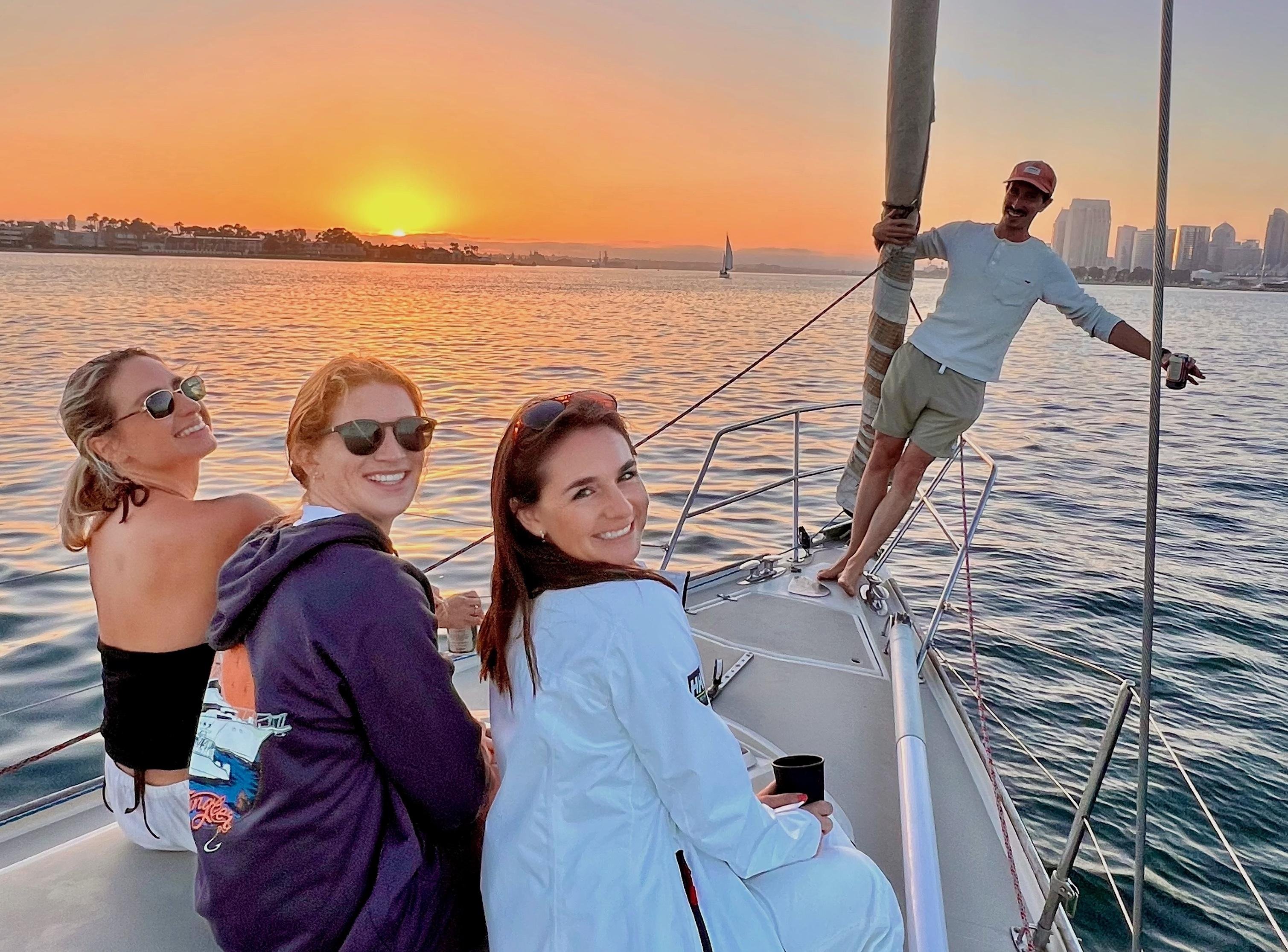
Glide across the harbor aboard a classic sailboat as the sun dips below the skyline
1 to 2 hours
Free Cancellation
Glide across the bay on a comfortable yacht while taking in waterfront landmarks and naval vessels
1.5 hours
Free Cancellation
Explore San Diego's waterfront on a narrated 90-minute bay cruise with stunning bridge and skyline views
75 minutes
Free Cancellation
Glide across calm bay waters as the sun dips below the Pacific horizon on this evening boat tour
Confirm your san diego whale watching tickets status at the dock.
Safety briefing and vessel departure from Mission Bay.
Travel to prime whale sighting zones guided by naturalists.
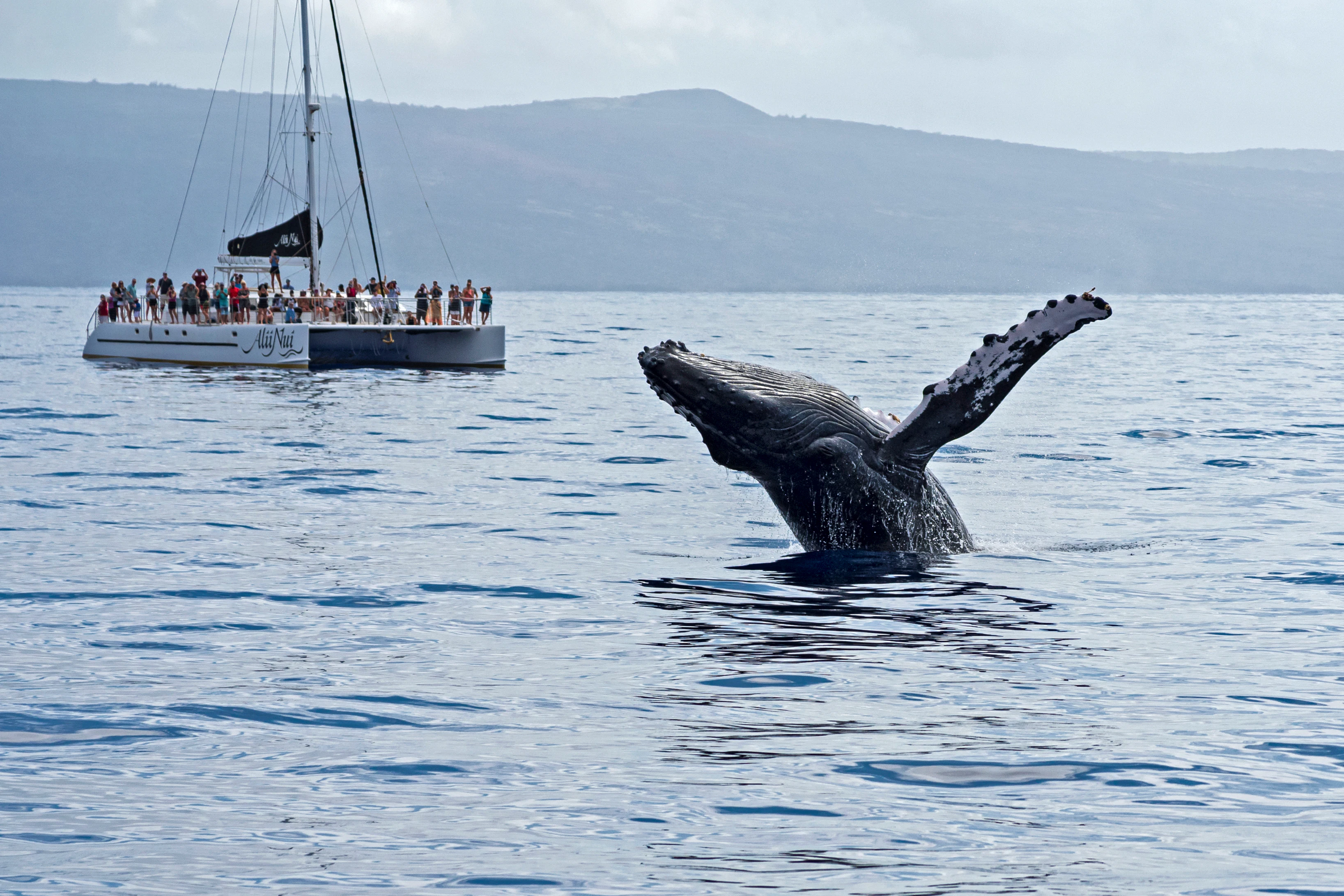
Witness the massive annual migration of these gentle giants near the coast. This species is known for traveling thousands of miles each season.
Observe these vocal pinnipeds lounging on harbor buoys near the departure point. They are common in the bay throughout the year.
Experience these agile swimmers often seen surfing the bow wave of the vessel. Pods can number in the hundreds during warm months.
Start your journey from this picturesque marine hub before heading to the open ocean. The area is a protected sanctuary for various bird species.
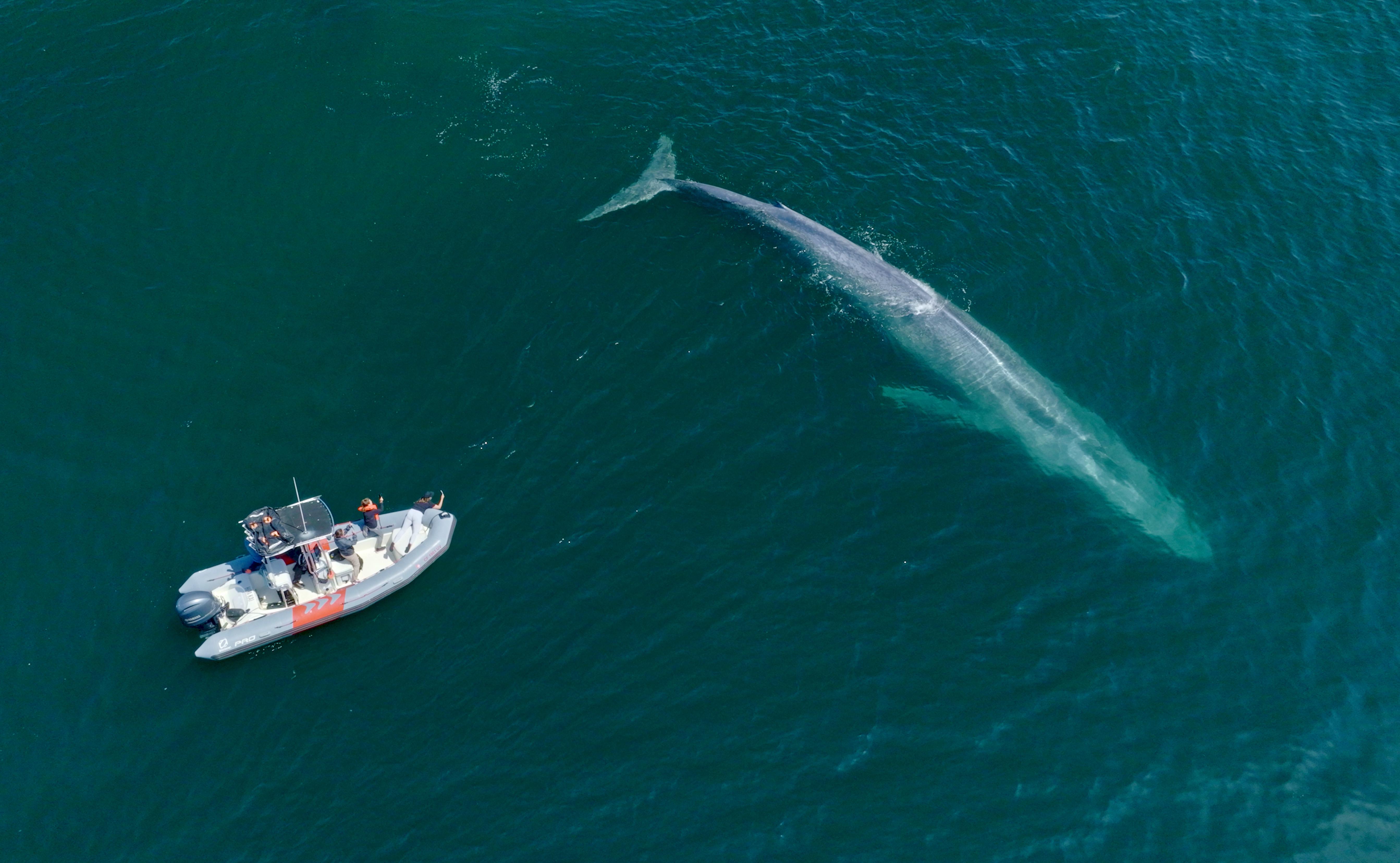
View the largest animal on the planet during seasonal sightings in San Diego. They can grow up to 100 feet in length.
You board at Mission Bay before dawn, stepping onto a stabilized deck as the crew checks life vests and deploys polarized binoculars. The boat clears the jetty at seven-thirty, turning west toward open water as the city's silhouette fades behind the stern.
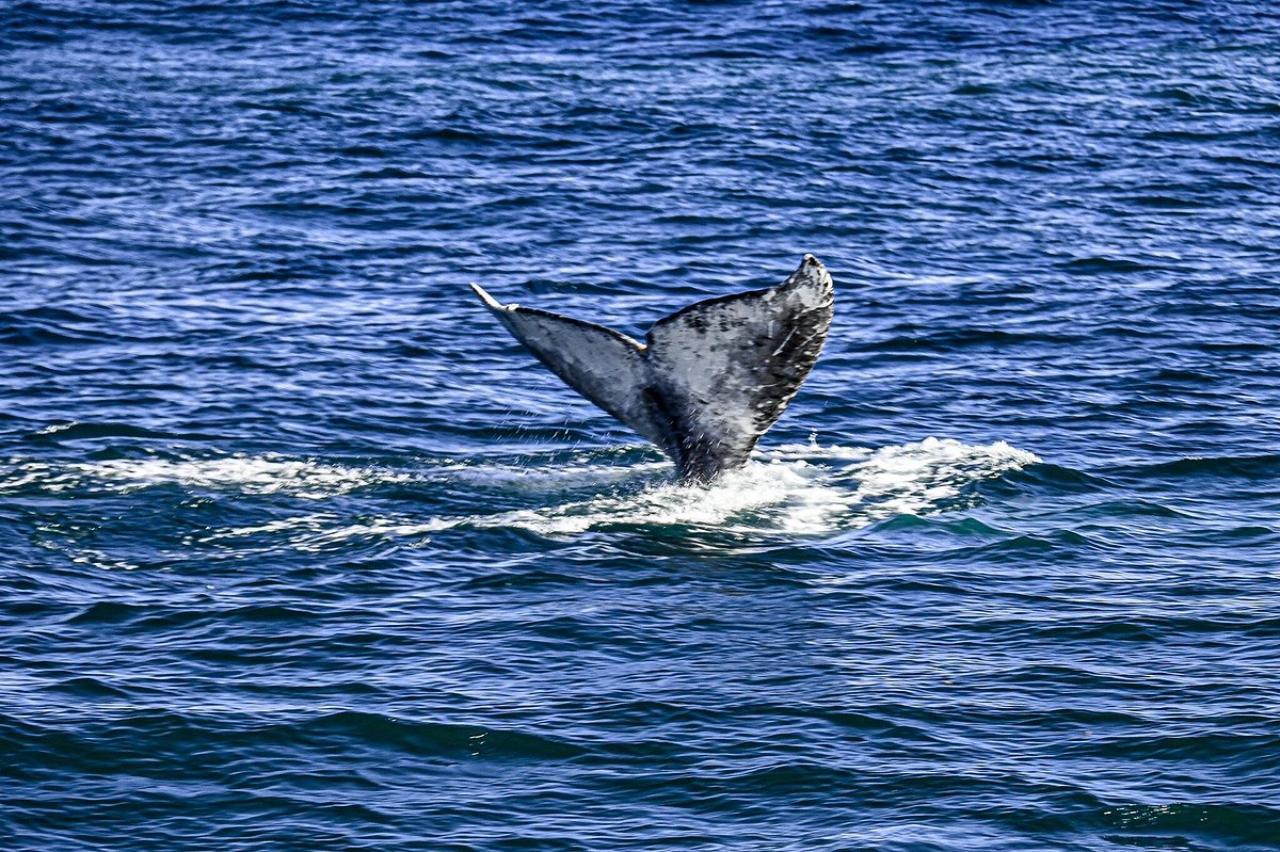
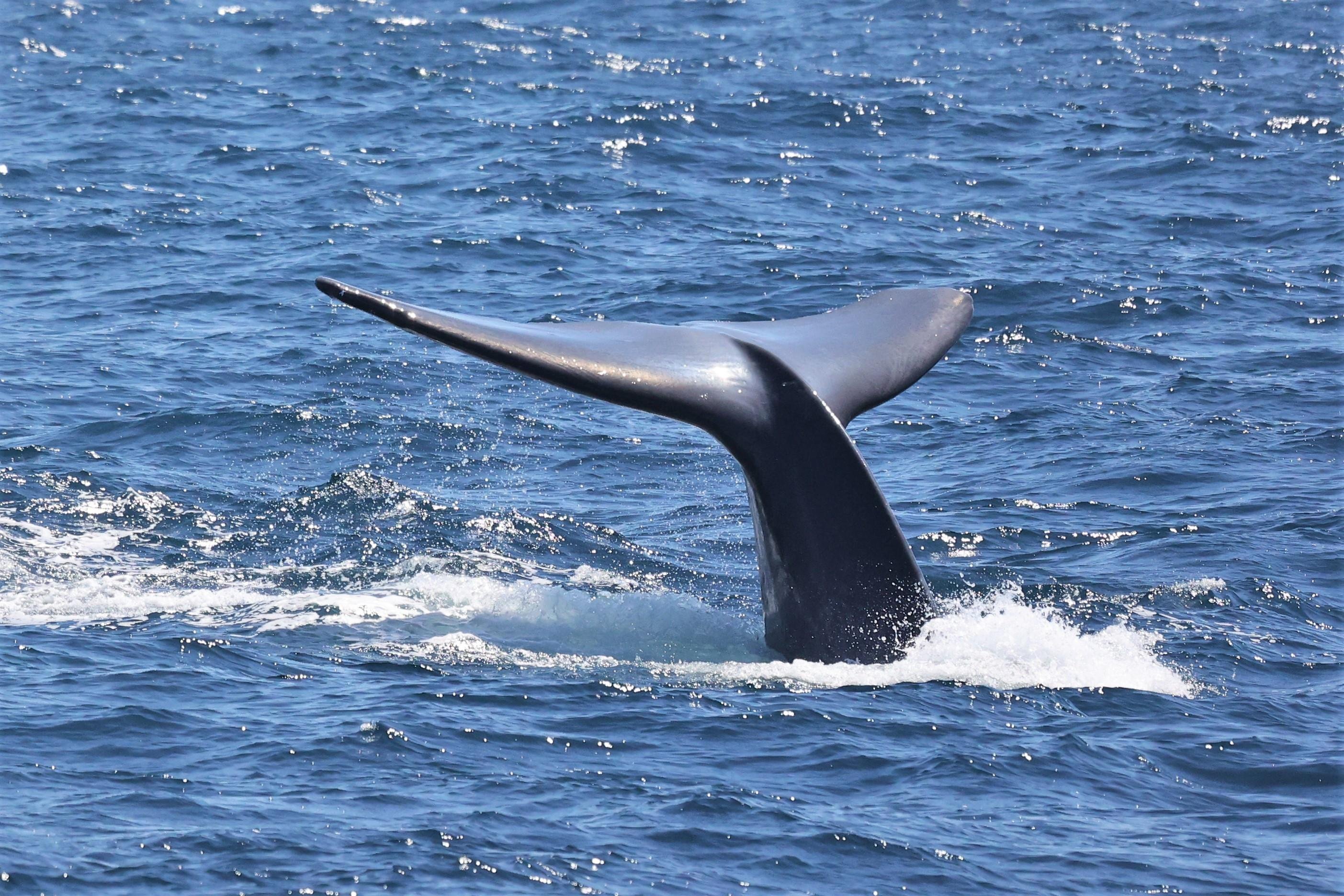
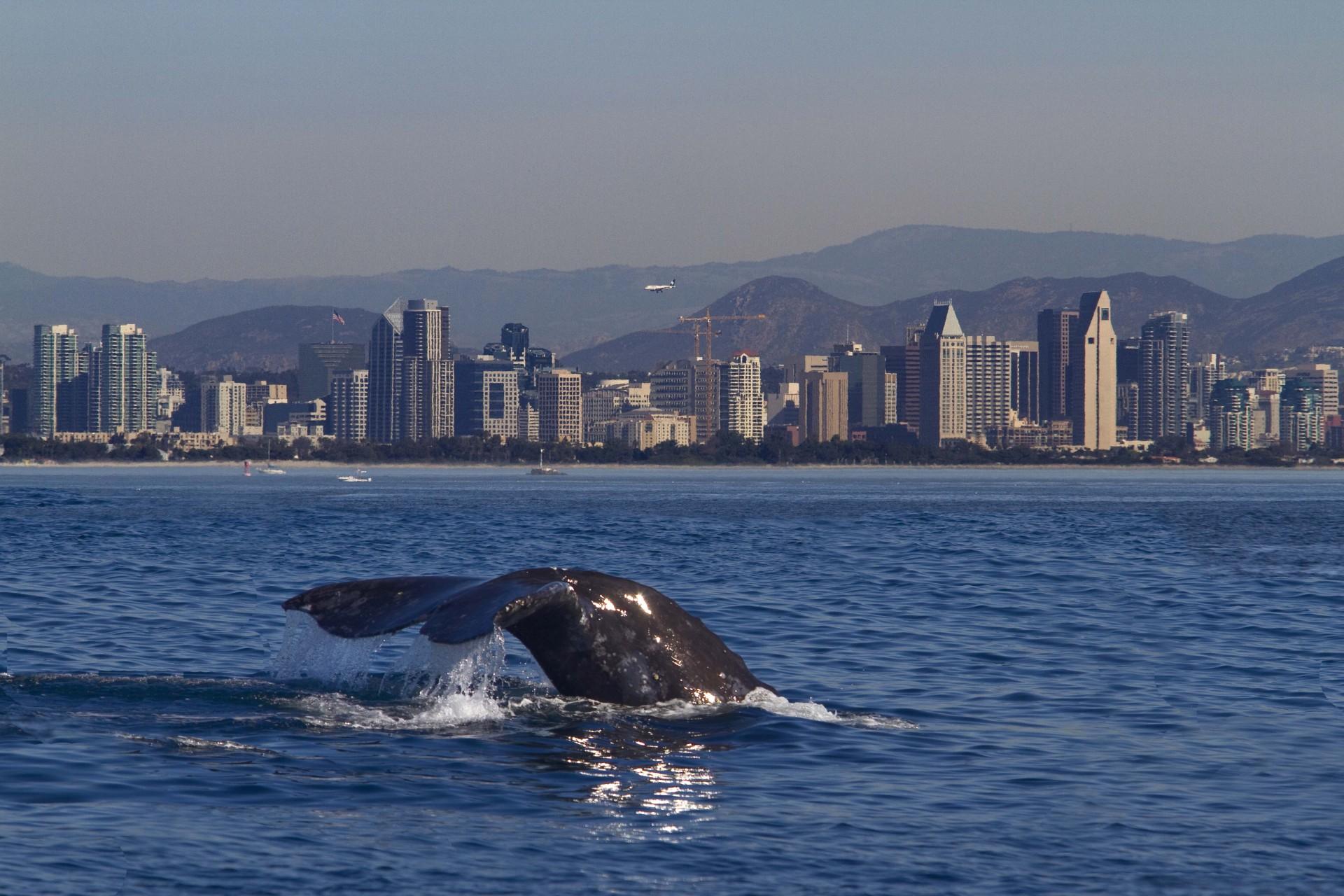
Within twenty minutes, the captain throttles back and points starboard—a gray whale's double blow rises thirty feet into the air, the spray backlit by early sun. You watch the barnacle-encrusted back roll forward, the tail flukes lifting vertically before the animal dives. The hydrophone speaker crackles with grunts and clicks as a pod of common dolphins races toward the bow, leaping in synchronized arcs and riding the pressure wave.
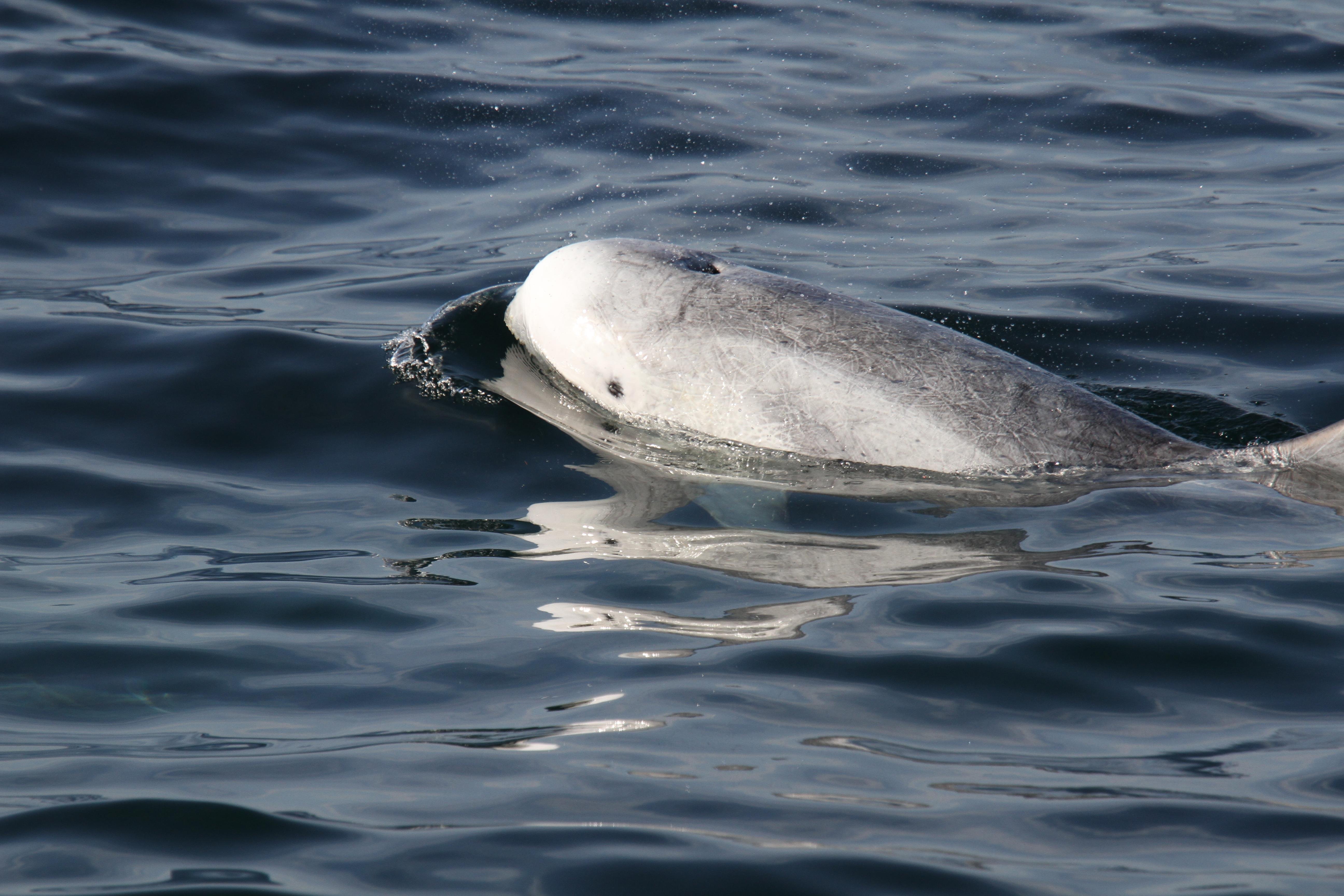
The naturalist identifies a mother gray whale and calf traveling north, the smaller whale surfacing three times for every adult breath. You count twelve blows before they sound, descending toward the canyon floor six hundred feet below. A Risso's dolphin breaks the surface to port, its scarred white body distinct among the smaller common dolphins still circling the boat. The crew scans the horizon for blue whale blows—taller and more columnar than gray whale spouts—but the summer feeding giants remain offshore today. You return to Mission Bay by mid-morning, salt spray dried on your jacket, the memory of a calf's eye—curious, unafraid—fixed in your vision.
All the details about your upcoming adventure in one place
The Eastern Pacific gray whale travels 12,000 miles annually from Alaska's Bering Sea to Baja California's breeding lagoons, passing San Diego's coastline every winter and spring in one of the planet's longest mammalian migrations.
Between mid-December and April, more than 20,000 gray whales navigate the kelp beds and submarine canyons just miles offshore, visible from Mission Bay's deep-water launch points. Blue whales, the largest animals ever to exist, arrive in summer months when upwelling currents drive krill concentrations into the San Diego Trough, a mile-deep trench that runs parallel to the shore and sustains the richest cetacean diversity on the California coast.
San Diego whale watching tickets grant access to vessels departing from Mission Bay, where the protected harbor allows year-round departures regardless of ocean swell. The bay's location between La Jolla Submarine Canyon to the north and the Coronado Escarpment to the south places whale-watching routes directly over migratory corridors and feeding zones used by gray whales, blue whales, finback whales, humpback whales, minke whales, and multiple dolphin species. Naturalists aboard expedition boats track real-time sightings via marine radio networks, adjusting routes to intercept pods and solitary travelers as they surface to breathe. The continental shelf drops steeply within three miles of shore, creating nutrient-rich upwelling zones that concentrate prey species and predators alike.
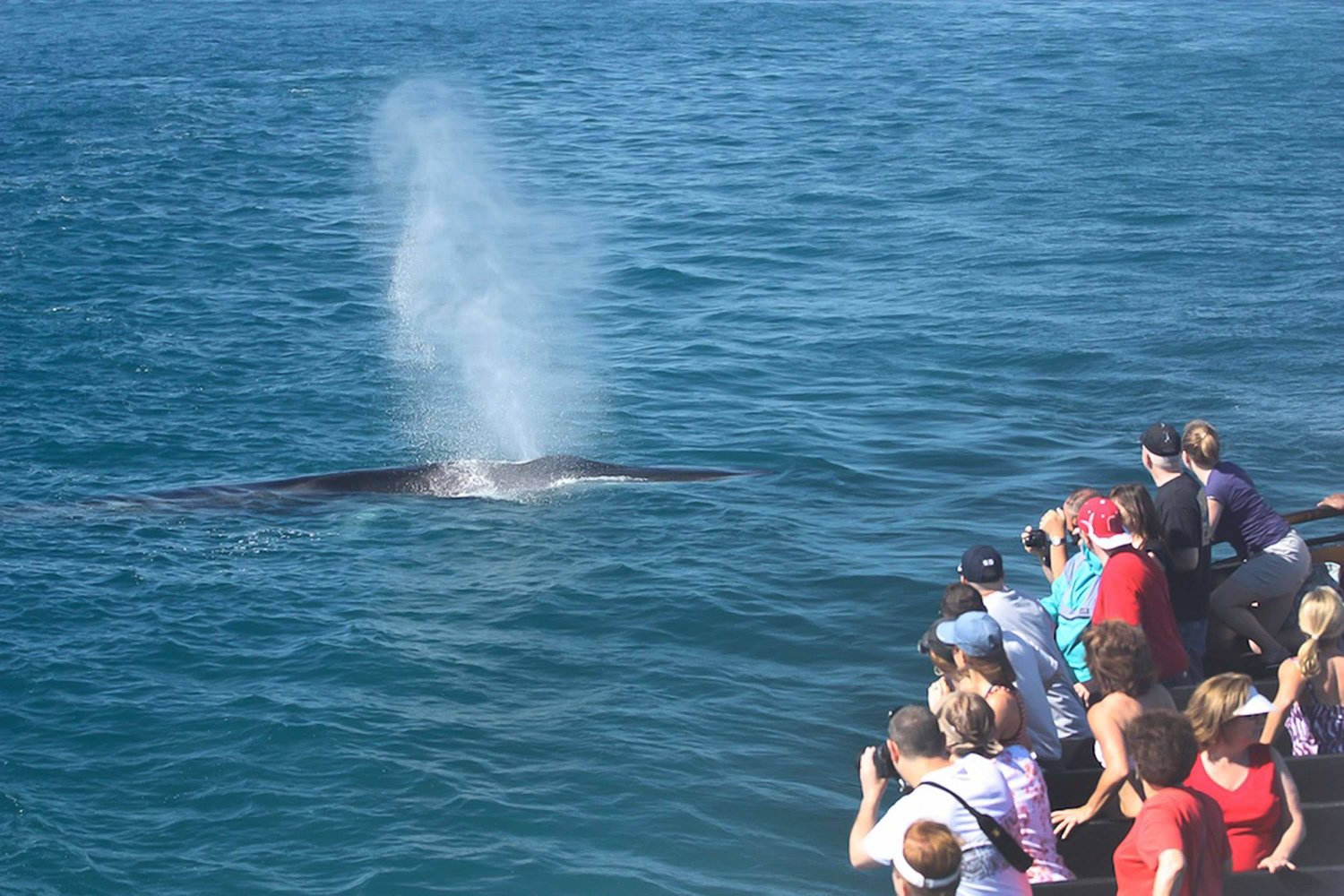
Modern whale-watching protocols in San Diego follow federal guidelines established by the National Oceanic and Atmospheric Administration, maintaining 100-yard minimum distances from large whales and 50 yards from dolphins to prevent behavioral disruption. Captains idle engines when cetaceans approach voluntarily, allowing bow-riding dolphins and curious gray whale calves to investigate vessels on their own terms. Hydrophones installed on select expedition boats broadcast underwater vocalizations through deck speakers, revealing the clicks of echolocating dolphins and the low-frequency moans of baleen whales communicating across miles of open water.
The San Diego whale watching tour season divides into two overlapping windows. Southbound gray whales pass between mid-December and February, traveling at three to five knots with few stops. Northbound migration from March through May brings mothers with newborn calves, moving slower and staying closer to shore for protection. Blue whale season peaks from June through September, when adult blues and their calves feed in offshore waters, occasionally visible from boats venturing ten to fifteen miles out. Common dolphins, bottlenose dolphins, and Risso's dolphins inhabit local waters year-round, appearing on more than eighty percent of excursions regardless of season.

Between mid-December and April, more than 20,000 gray whales navigate the kelp beds and submarine canyons just miles offshore.
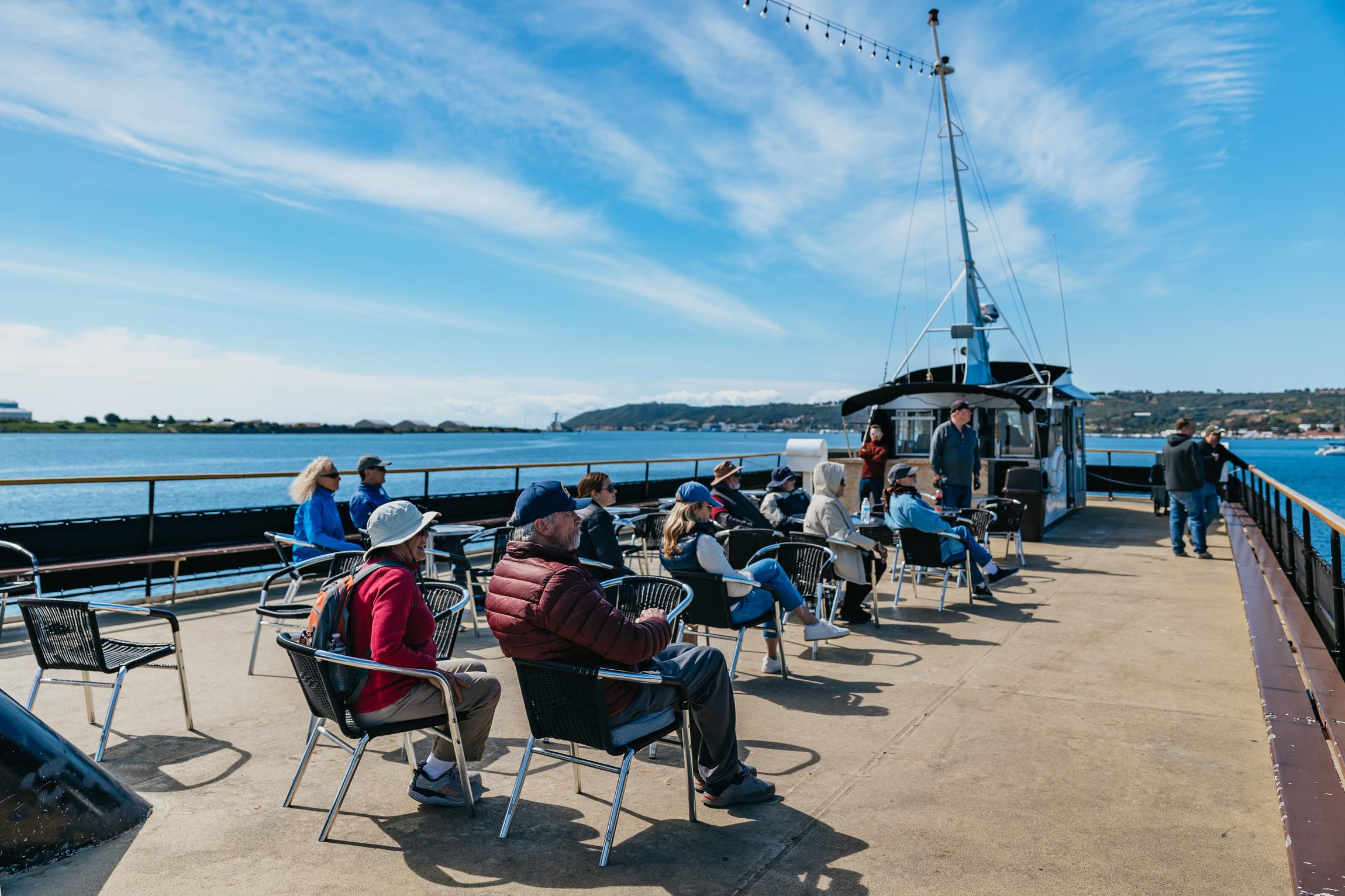
Wear layered clothing to accommodate fluctuating ocean temperatures and wind chill. Non-slip, rubber-soled shoes are required for safety on deck.
Small personal bags are permitted on board. All items should be kept secure to prevent loss during motion.
Photography is encouraged during San Diego whale watching tours. Secure your camera with a strap to protect equipment from sea spray.
Children are welcome on board, though infants require close supervision. Life jackets are provided and mandatory for younger passengers.
Most vessels accommodate standard wheelchairs, but guests should contact the operator regarding specific ramp accessibility. Staff assist with boarding at the dock.
Personal snacks and non-alcoholic beverages are permitted on San Diego whale watching tickets tours. Many vessels feature an onboard snack bar.
Opening Hours
07:00–19:00
Address
Mission Bay, San Diego, CA
Accessibility
Vessel-dependent
Best Arrival
07:00–09:00
Official Site
https://sdwhalewatch.com
Public transport · 45 min · Varies
Use local bus lines to reach the Mission Bay transit center. Short walk to the departure point.
Car · 30 min · Variable
Parking is available in designated lots near the marina. Arrive early to secure a spot.
Cancellations made at least 24 hours in advance are eligible for a full refund. No general entrance fee applies, as all excursions are priced per ticket.
Recommended time
2.5-4 hours
Most excursions last between 2.5 and 4 hours, providing ample time to reach open water and observe marine life along the Pacific coast. Securing your san diego whale watching tickets in advance is highly recommended to guarantee your preferred departure time. Morning trips generally offer calmer ocean swells, which are ideal for a smoother experience on your whale watching excursion.
Crowd levels through the day
Weather · crowds · average price — dots go green to amber to red as each metric rises.
December through April sees the migration of gray whales. Expect cooler temperatures and occasional rain showers.
May through June offers opportunities to see blue whales near the shore. Warm, pleasant weather dominates this season.
July through September provides sightings of blue and fin whales. Temperatures are consistent and ideal for ocean travel.
October through November serves as a quiet period. Waters remain calm and sightings of dolphins are common.
Keep your eyes on the horizon for blows or breaches. Binoculars help significantly with spotting distant activity.
Take preventative measures if you are prone to seasickness. Stay on the upper deck for better airflow.
Purchase san diego whale watching tickets online in advance to guarantee your preferred time. Tours fill up quickly during peak migration months.
Use a high shutter speed to capture leaping whales. Keep your camera inside a dry bag when not in use.
Support the research efforts highlighted during your san diego whale watching tickets tour. Naturalists provide deep insights into local biodiversity.
San Diego's commercial whale watching industry emerged in the late 1950s when sport-fishing operators noticed gray whales migrating past Point Loma each winter. The first dedicated whale watching excursions launched from Mission Bay in 1963, organized by marine biologists who charged nominal fees to fund research. These early trips carried fewer than twenty passengers and relied on binoculars and luck. By 1970, improved hydrophone technology allowed captains to detect whale vocalizations beneath the surface, transforming random sightings into reliable encounters. The gray whale migration corridor—just five miles offshore—made San Diego one of North America's most dependable viewing destinations. Charter companies proliferated along the waterfront through the 1980s, but the industry faced near-collapse in 1992 when new federal regulations required expensive vessel retrofits for marine mammal observation. Smaller operators shuttered; survivors consolidated around Mission Bay's protected waters. The Marine Mammal Protection Act amendments of 1994 standardized approach distances and captain licensing, establishing protocols still followed today. Blue whale sightings surged after 1998 as krill populations rebounded near the Coronado Escarpment, extending the traditional December-through-April season into summer months. Hurricane-force storms in January 2005 damaged much of the touring fleet, forcing a two-month shutdown during peak migration. The introduction of high-speed catamarans in 2010 cut transit times to offshore feeding grounds, enabling half-day excursions that previously required full-day charters. Today's san diego whale watching tickets provide year-round access to multiple cetacean species, supported by real-time tracking networks and naturalist-guided interpretation. The industry now prioritizes low-impact observation techniques, with captains maintaining mandated buffer zones and limiting engine noise during encounters.
First organized whale watching tours depart Mission Bay, led by marine researchers studying gray whale migration patterns.
Hydrophone technology adoption allows captains to locate whales acoustically, increasing successful sighting rates.
Federal marine mammal regulations force fleet-wide vessel modifications; many small operators exit the market.
Blue whale populations return to waters off San Diego, extending the traditional viewing season into summer and fall.
January storms damage touring vessels across Mission Bay, halting operations during peak gray whale migration weeks.
High-speed catamaran fleet launches, reducing offshore transit time and enabling shorter tour formats.
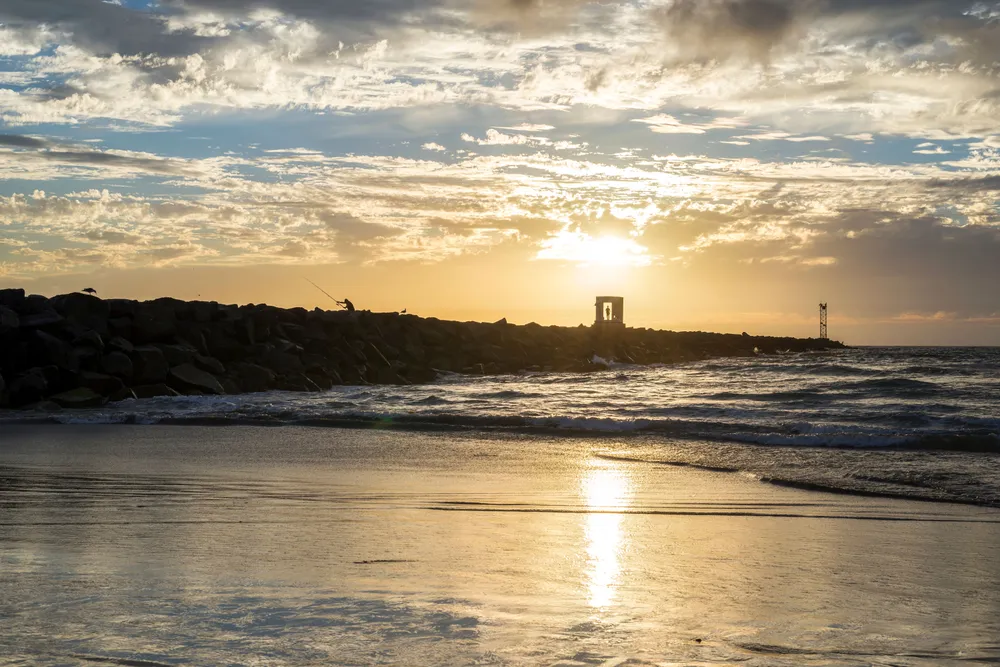
Stand at the end of the jetty for a wide-angle perspective of vessels departing the harbor. This location provides a clear view of the horizon and potential marine life surfacing near the channel entrance.
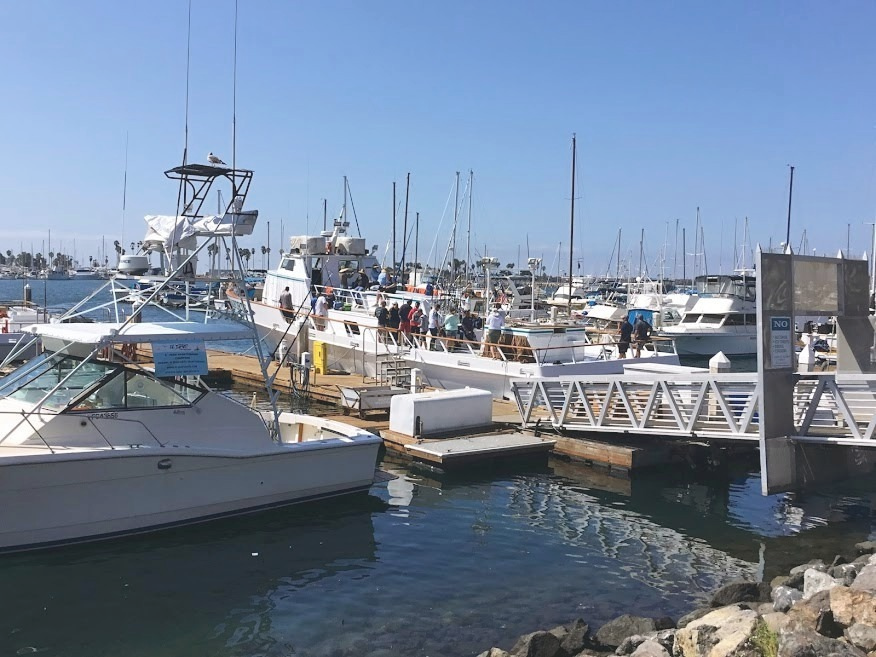
Capture the preparation of the fleet from the main boardwalk before securing your san diego whale watching tickets. This vantage point offers intimate shots of the vessels against the calm water of the marina.
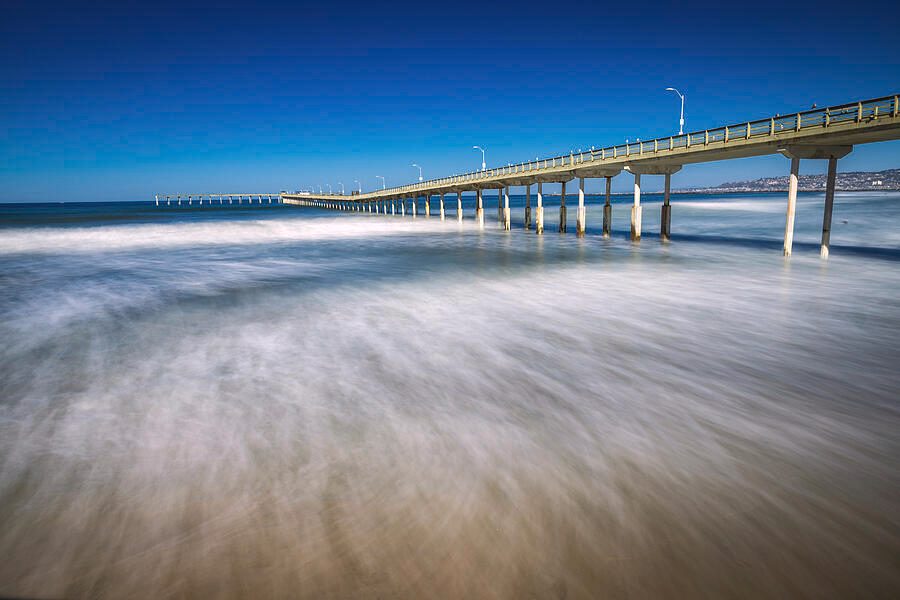
Position your camera along the western edge for a high-angle shot looking down at passing San Diego whale watching tickets tours. The pilings and surf provide a textured foreground for long-lens captures of migrating species.
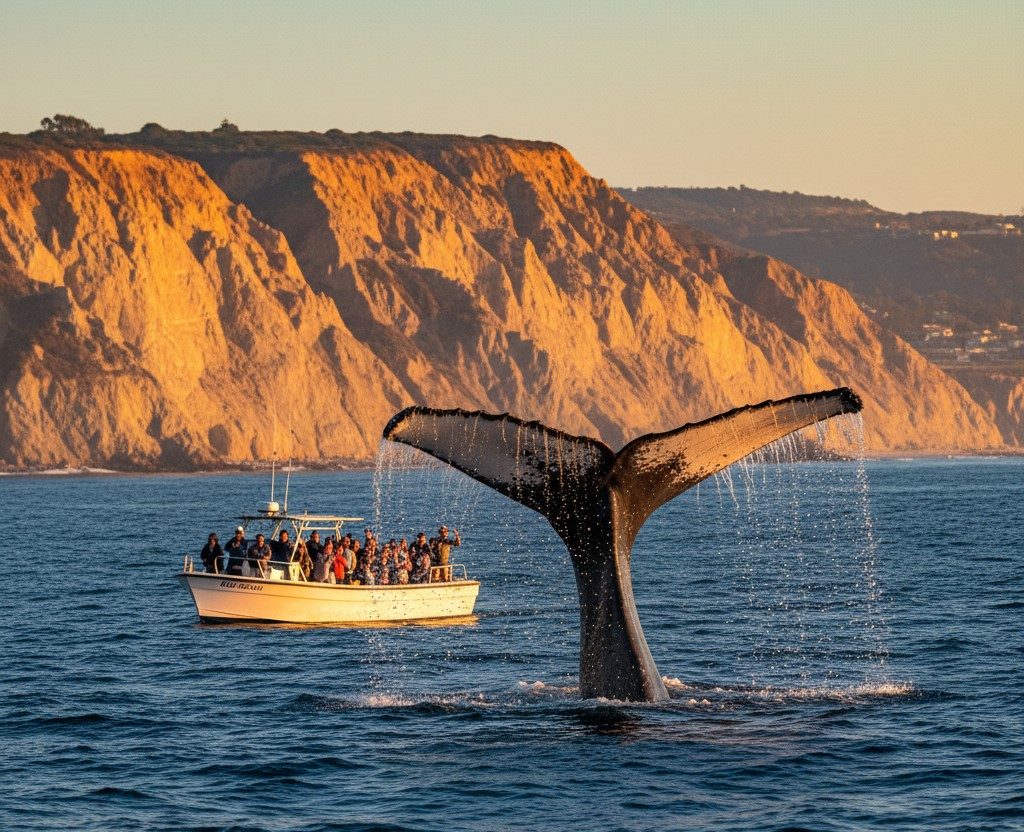
Use the dramatic sandstone formations to frame the open ocean where San Diego whale watching tickets tour boats traverse the coast. This spot is ideal for capturing the scale of the Pacific against the rugged landscape.
Planning an ocean excursion requires preparation, but securing san diego whale watching tickets opens up a memorable educational experience for children. Being on the water provides a unique vantage point for observing marine life in their natural habitat.
Administer preventative medication before boarding as ocean swells can vary significantly; keep children in the center of the vessel to minimize movement.
Strollers are generally not permitted on board due to limited deck space and safety hazards, so opt for a secure infant carrier instead for san diego whale watching tickets tours.
While guests of all ages are welcome, children under age five often struggle with the extended duration and boat noise; consider private charters if you have toddlers.
Require children to remain seated while the vessel is in motion and ensure they understand where the life jackets are stored for every san diego whale watching tickets tour.
Onboard restrooms are compact, making it essential to handle diaper changes and restroom breaks at the dock before your san diego whale watching tickets tickets departure.
Visitors seeking food near san diego whale watching tickets will find several casual eateries located within Mission Bay. While there are no dining facilities directly on-site, the surrounding area provides convenient options for a meal before or after your San Diego whale watching tour.
A casual spot offering burgers and craft beer, perfect for a post-excursion meal. It features outdoor seating that provides a relaxed atmosphere for those who have just secured their san diego whale watching tickets tours.
Popular for breakfast and brunch, this local favorite serves hearty plates like pancakes and scrambles. It is a frequent stop for guests arriving early for san diego whale watching tickets tickets.
This laid-back restaurant specializes in thin-crust pies and salads in a beach-themed setting. It serves as an accessible dining choice for travelers exploring the broader Mission Bay landmarks after a san diego whale watching tickets tour.
Everything you need to know for your journey
San Diego Whale Watching operates daily from 07:00–19:00.
We recommend booking your san diego whale watching tickets online in advance to ensure availability.
Accessibility varies by vessel; please contact San Diego Whale Watching directly to confirm requirements for your specific excursion.
You may receive a full refund if you cancel your san diego whale watching tickets at least 24 hours before your scheduled departure.
Yes, you can bring small snacks and water on board your san diego whale watching tickets tour.
We suggest wearing layers and rubber-soled shoes for comfort and safety during your san diego whale watching tickets tour.
For the best conditions, book your san diego whale watching tickets for a morning departure between 07:00–09:00.
Yes, children are welcome on San Diego Whale Watching tours, and life jackets are provided.
After your san diego whale watching tickets tour, explore nearby attractions like Mission Bay Park or the historic Belmont Park.
Extensive recreational area with walking paths and water access.
Historic oceanfront amusement park with a wooden roller coaster.
Renowned marine theme park adjacent to the bay.
Iconic wooden pier offering panoramic Pacific Ocean vistas.
Upscale waterfront lodging with direct bay access.
Comfortable accommodation within walking distance of the coast.
Variety of options ranging from boutique to budget stays.
Join thousands of happy travelers who have discovered this incredible experience
Book Your Experience Now