

Quick answer
The san diego whale watching season spans two migration windows: December through April for gray whales traveling between Alaska and Baja California, with peak sightings in January and March, and June through September for blue whales feeding off the continental shelf, with July and August offering the highest encounter rates. Tours operate daily from 08:00 to 18:00 at $63 per adult, departing from 1717 Quivira Rd in Mission Bay.
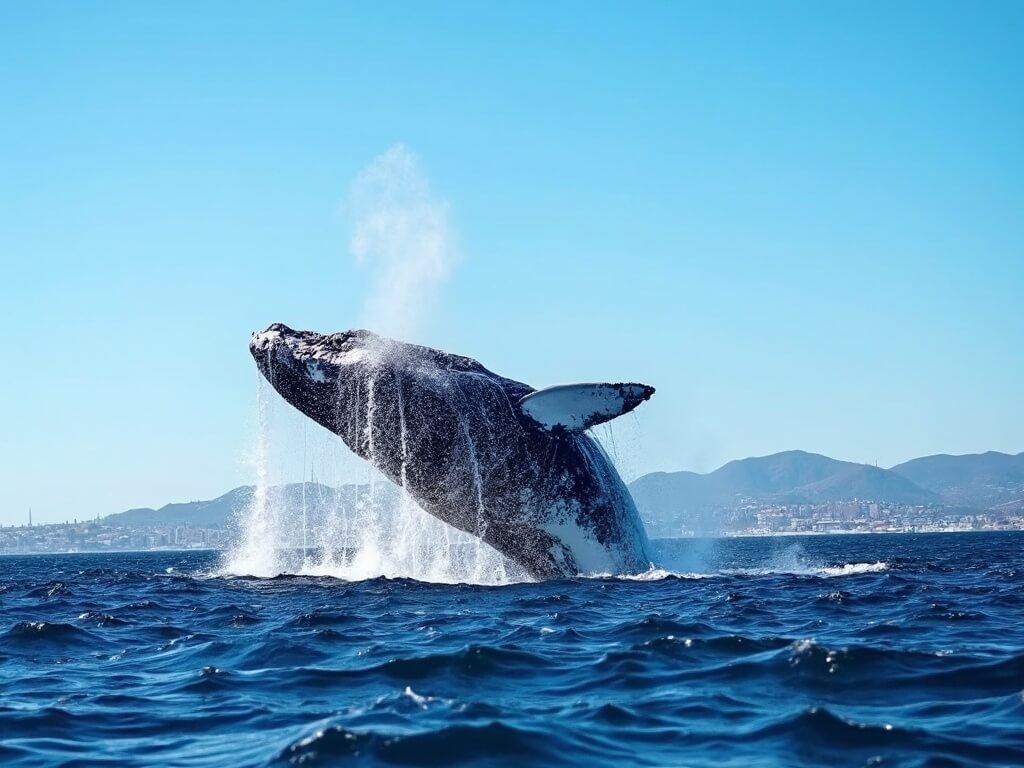
Nearly 20,000 gray whales pass San Diego's coastline twice annually, making it one of the longest large-mammal migrations on Earth. The southbound journey begins in mid-December as pregnant females lead the procession toward calving lagoons in Baja California, peaking in early January when dozens may be visible from shore on clear days. Northbound migration reverses the pattern from late February through April, bringing mothers with newborn calves close to kelp beds where they rest and nurse. Blue whales follow an entirely separate calendar tied to krill blooms along the continental shelf. These baleen giants arrive in June and remain through September, with July and August producing the most reliable sightings as upwelling concentrates their prey. A single blue whale can consume four tons of krill daily, and feeding aggregations sometimes draw fifteen or more individuals to the same patch of ocean. The san diego whale watching season thus offers two distinct experiences: the intimate drama of gray whale calves learning to breach in spring, or the raw scale of blue whales—the largest animals ever to exist—surfacing alongside the boat in summer. Migration timing shifts slightly each year based on ocean temperature and prey distribution, but the overall windows remain stable. Gray whales favor calm winter mornings when glassy seas make blows visible from miles away. Blue whales surface unpredictably throughout the day, though morning departures benefit from better light for photography. Weather conditions matter more than the calendar day—a January tour in flat seas will outperform a March departure in rough water. Fall months from October through November see the fewest sightings as both species occupy distant feeding or breeding grounds. Tour operators continue daily departures year-round, often pivoting to dolphins, sea lions, and occasional humpback or fin whale sightings during the gap. Serious whale watchers target the shoulder dates—late December for the first gray whales, late March for mothers with calves, or late June when blue whales first appear—to avoid peak-season crowds while still catching prime migration activity.
“Nearly 20,000 gray whales pass San Diego's coastline twice annually, making it one of the longest large-mammal migrations on Earth.”
Understanding the San Diego Whale Watching Season and Peak Times
The San Diego whale watching season is defined by two primary migration windows, with morning hours consistently offering the most favorable ocean conditions for viewing. Planning your excursion during these peak migration months ensures the highest probability of sighting Gray or Blue whales.
Mid-December to April
ModerateCool, 60–65°F
The Gray whale migration dominates these months as they travel between Alaska and Baja California. Frequent sightings occur throughout the season with peak activity often in January and February.
June to September
HighWarm, 70–75°F
Blue whales arrive in local waters to feed on krill during the summer and early autumn. This season offers the best opportunity to observe the largest animal on the planet.
Weekday mornings
Low—
Morning trips provide the calmest sea conditions, which improves visibility and comfort. Reduced vessel traffic during these hours often results in a more focused viewing experience.
Verdict: For the highest probability of sightings and calmest seas, target weekday mornings during the peak months of January for Gray whales or August for Blue whales.
Operational Hours for San Diego Whale Watching Season Tours
The whale watching office is open daily to assist with tour inquiries and departures. Staff are available throughout the week to manage scheduling and guest check-in.
| Monday | 08:00–18:00 | |
|---|---|---|
| Tuesday | 08:00–18:00 | |
| Wednesday | 08:00–18:00 | |
| Thursday | 08:00–18:00 | |
| Friday | 08:00–18:00 | |
| Saturday | 08:00–18:00 | |
| Sunday | 08:00–18:00 |
Directions and Arrival Guidelines for San Diego Whale Watching Season
The departure point for whale watching tours is located at 1717 Quivira Rd, San Diego, CA 92109. Most visitors reach the site by car via I-5 or I-8, providing direct access to the Mission Bay area.
I-5 South or I-8 West to Quivira Rd
Route 8 or 9 to West Mission Bay Dr
Direct to 1717 Quivira Rd
Pre-Visit Checklist for Your San Diego Whale Watching Season Tour
Prepare for changing sea conditions and extended time on the water with these essential items.
-
Layer clothing for cool mornings — Ocean temperatures average 15–18°C; wind chill increases on open water.
-
Bring motion sickness medication if prone — Swells can reach 1–2 meters even on calm days; take medication 30–60 minutes before departure.
-
Pack binoculars for distant sightings — Gray whales surface 400–800 meters from the vessel; naked-eye viewing misses details.
-
Wear non-slip, closed-toe shoes — Wet decks become slippery; sandals and heels are prohibited for safety.
-
Apply reef-safe sunscreen before boarding — UV reflection off water intensifies exposure; reapplication during the tour disrupts wildlife viewing.
-
Charge your camera or phone fully — Tours run 3–4 hours; low battery means missed breach shots.
-
Bring a light waterproof jacket — Spray from waves and occasional mist are common, especially on morning departures.
Check availability
Frequently asked questions about san diego whale watching season
Everything you need to know about san diego whale watching season