

Quick answer
San Diego whale watching best time of year spans two seasons: mid-December through late March for gray whale migration, and mid-June through September for blue and humpback whales. Gray whales offer the highest sighting rates during their southbound journey in January and February. Blue whales, the largest animals on Earth, appear reliably from late June onward when upwelling brings krill concentrations close to shore.
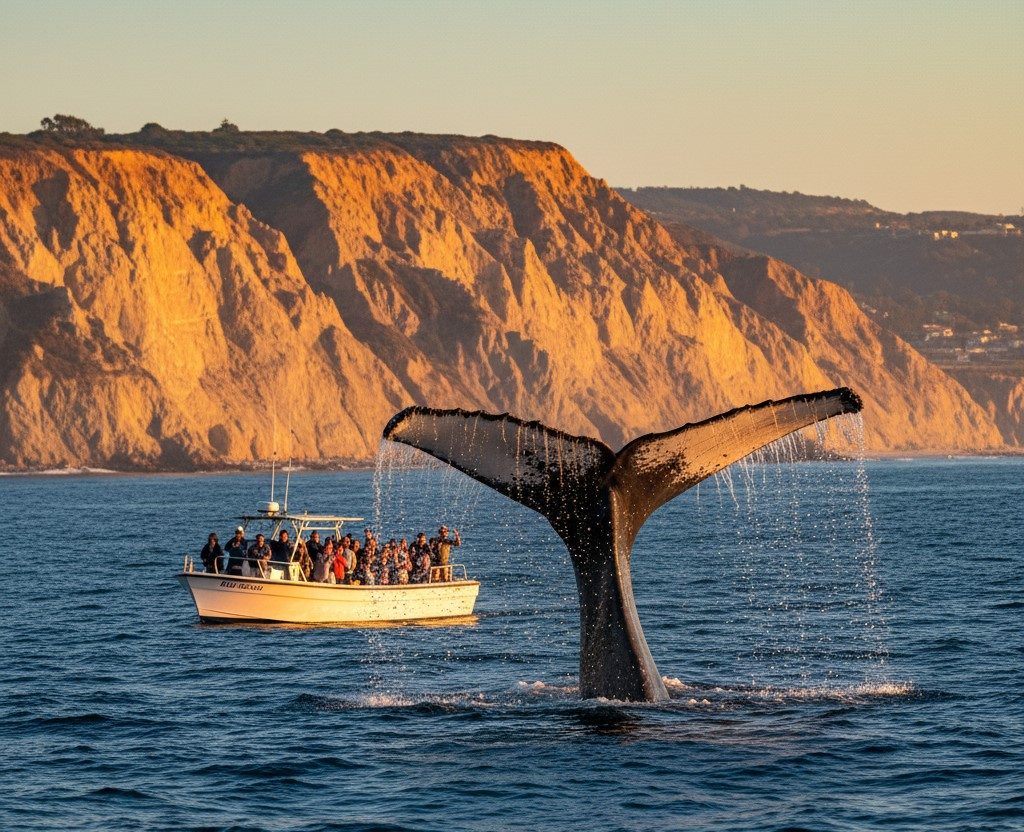
More than 20,000 gray whales pass San Diego's coast twice a year during the longest mammal migration on the planet. The southbound leg begins in mid-December as pregnant females lead pods from Alaska's feeding grounds toward Baja California's calving lagoons. Peak sightings occur in January and February when the migration reaches full intensity, with multiple pods visible per trip. By late February the migration shifts northbound, though calving mothers with newborn calves move slowly and remain visible through March. Summer brings an entirely different lineup. Blue whales arrive in June when seasonal upwelling drives krill swarms into the nearshore canyons off Point Loma and La Jolla. These baleen whales, reaching 100 feet in length, feed actively through September and produce sightings on most tours during peak months. Humpback whales overlap the same window, often breaching and tail-slapping in displays that make summer expeditions visually dynamic. Fin whales and occasional orcas round out the summer roster. Morning departures between 08:00 and 14:00 offer the calmest sea conditions and the best natural light for photography and observation. Tours operate daily from Mission Bay and Broadway Pier, with starting prices around 58 USD depending on vessel type and duration. Booking a few days ahead secures your preferred departure slot, especially during the January–February gray whale peak and the July–August blue whale window when tour demand rises. Choosing between winter and summer depends on what you want to witness. Gray whale season delivers high-volume migration spectacle and the chance to see mothers with calves during the northbound return. Summer prioritizes the sheer scale of blue whales and the acrobatic behavior of humpbacks. Both seasons provide reliable sightings when you time your visit to match the biological rhythms driving these animals through San Diego's waters.
“More than 20,000 gray whales pass San Diego's coast twice a year during the longest mammal migration on the planet.”
Daily Operating Hours for San Diego Whale Watching
San Diego whale watching tour operators maintain consistent daily operating hours throughout the week to accommodate visitors.
| Monday | 08:00–17:00 | |
|---|---|---|
| Tuesday | 08:00–17:00 | |
| Wednesday | 08:00–17:00 | |
| Thursday | 08:00–17:00 | |
| Friday | 08:00–17:00 | |
| Saturday | 08:00–17:00 | |
| Sunday | 08:00–17:00 |
San Diego Whale Watching Best Time of Year Pricing Considerations
Whale watching costs in San Diego are determined by the specific tour operator and the type of vessel selected. Prices fluctuate based on service provider offerings and seasonal demand.
The starting price for a whale watching tour is 58 USD, though actual rates vary by operator.
How to Get to San Diego Whale Watching Locations
Whale watching departures in San Diego are primarily located at Mission Bay and Broadway Pier. Visitors should verify their specific departure point with their operator before traveling, as locations vary across the harbor.
Interstate 5 (I-5) to Downtown or Mission Bay exits
Amtrak Pacific Surfliner to Santa Fe Depot
MTS Bus routes to Broadway/Harbor Drive
Direct to Broadway Pier or Mission Bay marina
San Diego Whale Watching Best Time of Year Trip Checklist
Pack appropriately for a boat trip to maximize comfort and sightings.
-
Book your tour in advance — Operators fill up quickly during peak whale migration seasons.
-
Bring layered clothing and a windproof jacket — Ocean temperatures drop and winds pick up on the water.
-
Pack sunscreen and sunglasses — Sun reflection off the water intensifies UV exposure.
-
Wear non-slip, closed-toe shoes — Boat decks can be wet and unstable in swells.
-
Bring binoculars or a camera with zoom — Whales surface at varying distances from the boat.
-
Take motion sickness medication if needed — Even calm conditions can trigger seasickness for sensitive passengers.
-
Carry your booking confirmation — Digital or printed proof ensures smooth check-in at the departure point.
Check availability
FAQs: San Diego Whale Watching Best Time of Year
Everything you need to know about san diego whale watching best time of year